
|
|
![]()
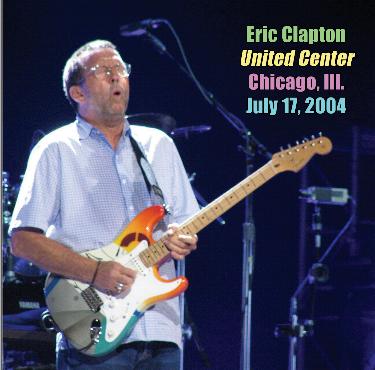
Eric Clapton - United Center
Disc 1:
Disc 2:
Comments: Unknown recording lineage. Disc times for this version are 51:46/62:56.
CHICAGO TRIBUNEMUSIC REVIEWClapton has lost a bit of his daredevil edge, but still plays with fire
Special to the Tribune July 20, 2004 In 1968, while he was with the band Cream, Eric Clapton recorded a concert rendition of Robert Johnson's "Crossroads Blues," and both the blues and rock music have yet to recover from it. Clapton's supercharged guitar and scorched earth solo (and Jack Bruce and Ginger Baker's stampeding groove) helped establish frenzied bombast as a pinnacle of creative expression, and all too many guitarists since then have emulated his example. But when Clapton performed a handful of Robert Johnson tunes from his new tribute CD, "Me and Mr. Johnson," midway through his show at the United Center on Saturday night, he and his band sat during them, beginning with jaunty acoustic renditions that set their legs shuffling back and forth. Even after switching to electric guitar s for versions of "Milkcow's Calf Blues" and "If I Had Possession Over Judgement Day" that had as much fiery intensity as Cream once did, Clapton traded raw abandon for deliberate finesse. He shouted Johnson's double-entendres and threats with careful timing while playing corrosive rhythm guitar riffs, Doyle Bramhall II punctuated Clapton's singing with searing slide guitar licks, and drummer Steve Gadd stomped on the beat as if he were trying to put out the fire. The difference between how Clapton played the Delta bluesman's music as a young man and how he plays it now as a slightly grizzled 59-year-old typifies the path his music has taken. Truth be told, he lost the daredevil edge that made him a legend three decades ago, replacing it with the steadier and considerably more laidback style that marks his solo career. At its worst, that approach has produced a glut of mellow pablum, represented in his concert by the sleep-inducing ballad "Wonderful Tonight." F ortunately, in recent years Clapton also has imbued his songs with a deeper musicality, a skillful sense of nuance. The hockey arena acoustics worked against this aspect, making Nathan East's bass lines inaudible and backing singers Sharon White and Michelle John superfluous. Still, subtle flourishes peeked through, including the way the band swung easily over Billy Preston's barrelhouse piano on "I Want a Little Girl," and the orchestral coda to "Badge," when Chris Stainton's lovely piano cascaded down on the guitarists' drone. That refinement extended to Clapton's frequent solos, which showed the fire still burning inside the guitarist as they moved quickly through swift variations on four-note figures punctuated with long sustains. Yet just when they reached a fever pitch and seemed on the verge of breaking into something revelatory, he brought them to an end. He briefly crossed over to the lowdown side of the blues with his guttural riffs during a ha rd-slamming rendition of "Cocaine," but only during "I Shot the Sheriff" did he let himself stretch out at length, building to slashing lines that found even Clapton himself gaping in amazement. In that moment, Clapton reconciled his passion with his precision, and he seemed to be most delighted by it of all. Copyright © 2004, Chicago Tribune
Your opinion counts! If you would like to have your comments about this entry posted here, please
Contact us! The goal is to
generate a database of visitor reviews much like that found on the excellent
SRV Review database.
Please indicate whether or not you want your name and email address attributed to your comments.
Please note that NOTHING HERE IS FOR SALE, so please don't ask. Thanks!
| ||||||||||